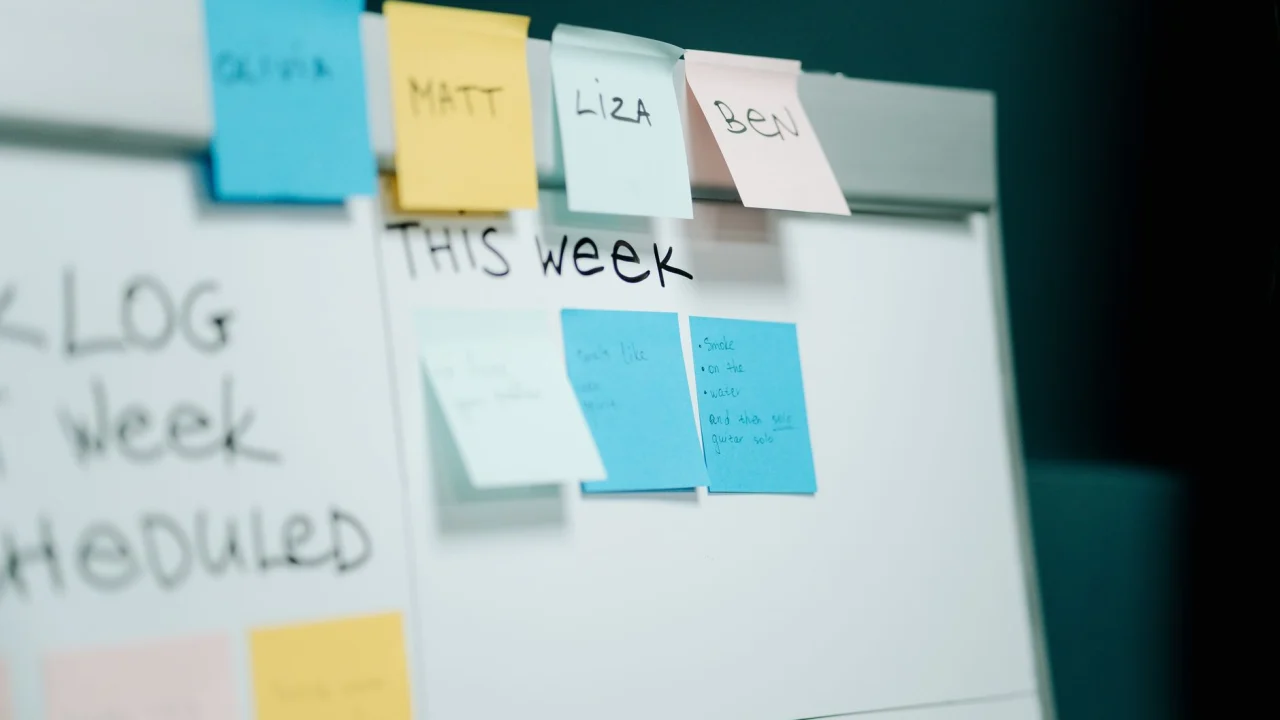
Most problems on web projects are not caused by bad code or the wrong technology. They start at the very beginning, when nobody has written down precisely what is being built, for whom and why. A brief is the document that solves exactly that problem. It is a short but precise description of your project that gives a web studio or development team everything they need to understand the goal and provide a serious estimate. A well-written brief shortens the time to the first version, reduces the number of iterations and prevents unpleasant budget surprises. Below we explain how to write one, even if you are not a technical person.
What is a brief, and why does it matter?
A brief is not a technical specification and does not need to include details about databases or programming languages. It is a business document that describes the problem, not the solution. Its purpose is to align the expectations of you as the client and the team building the system before a single line of code is written.
Without a brief, every meeting starts from scratch, every estimate is a guess and every change becomes a debate about what was actually agreed. With a brief, you have a shared starting point that both sides can refer back to. The clearer the document, the more precise the proposal, and the less likely you are to pay for work that does not match your real needs.
Define the goal before anything else
The first question a brief must answer is not what the website should look like, but what it should achieve. The goal guides every later decision, from structure to design and functionality. There is a huge difference between a site meant to collect inquiries and a store meant to sell directly online.
Try to phrase the goal in measurable terms. Instead of “we want a modern website,” write down exactly what you expect:
- increase the number of inquiries through the contact form
- let customers order products without having to call
- reduce the time the team spends manually processing applications
- present the company to a new market in a professional way
Once the goal is clear, it becomes easier to drop ideas that sound attractive but do not contribute to the result. That is the most valuable thing a brief can deliver.
Key elements of a good brief
There is no single template that fits every project, but there is a set of information that is almost always needed. If you prepare it in advance, you will speed up the whole process.
If you are thinking about a new or better website for your company, see how we approach website development for clients in Sarajevo and across Bosnia and Herzegovina.
About the company and context
Briefly describe what you do, who your clients are and what your current online presence looks like. If you already have a website, note what works on it and what frustrates you. This background helps the team understand the tone and expectations, not just the technical requirements.
Target audience
Describe who you are speaking to. Are they business buyers or consumers, how tech-savvy are they, which devices do they mostly use? A site aimed at an older audience will not be designed the same way as a platform for young users.
Features and content
List what the site must make possible. Separate what is essential from what would be nice to have. For example, a contact form and product display may be mandatory, while a newsletter tool integration is desirable but not critical for the first version.
Visual references and tone
Name two or three websites you like and explain why. References are faster and clearer than long descriptions. It also helps to mention what you do not like, so the team knows the boundaries right away.
Budget and timeline
This is the part clients skip most often, and the one that helps the most. A ballpark budget is not a weakness in negotiation; it is information that lets the team propose a solution within realistic limits. The same goes for timelines, especially if there is a fixed date such as a trade fair or a campaign launch.
Table: the minimum content of a brief
| Section | Question it answers | Required |
|---|---|---|
| Project goal | What do we want to achieve? | Yes |
| Target audience | Who are we speaking to? | Yes |
| Features | What must the site make possible? | Yes |
| Content | Who prepares the copy and images? | Yes |
| References | What do we like and dislike? | Recommended |
| Budget and timeline | What are the constraints? | Yes |
The most common mistakes to avoid
Experience shows that most clients make the same oversights. If you recognize them in time, your brief will be well above average.
- Describing the solution instead of the problem. If you ask for one specific feature right away, you may miss a simpler and cheaper solution the team would have proposed had it understood the real problem.
- Being too vague. Sentences like “we want something modern and simple” carry no information. Be specific.
- Ignoring content. Copy, images and translations are often late and block the entire project. Define who prepares them and by when.
- Leaving out the budget. Without a range, the team has to guess, and you get a proposal that may not fit you at all.
- Too many authors. If five people write the brief without coordinating, the document becomes contradictory. Appoint one person responsible for the final version.
How to turn a brief into a successful project
A brief is not the end of the conversation, but its beginning. A good development team will use your document to ask additional questions, suggest changes and sometimes challenge assumptions. That is a good sign, because it means your partner is thinking about the result, not just about completing tasks. That is exactly why it helps to choose a team that offers a wide range of digital services, because they can suggest the approach that fits your goal, whether that is a business website, an online store or a more complex platform.
Once the brief is agreed, it becomes the reference point throughout the project. Every change is measured against the original goals, not against the mood of the moment. That brings discipline to the process and protects both time and budget. If you are not sure how to structure your document, or you would like someone to review your idea before you start, feel free to contact us and we will lay the foundations together.
Writing a brief takes a few hours, and the savings it brings are measured in weeks and in nerves. Invest that time at the start, and your web project will begin from a position of clarity rather than guesswork.