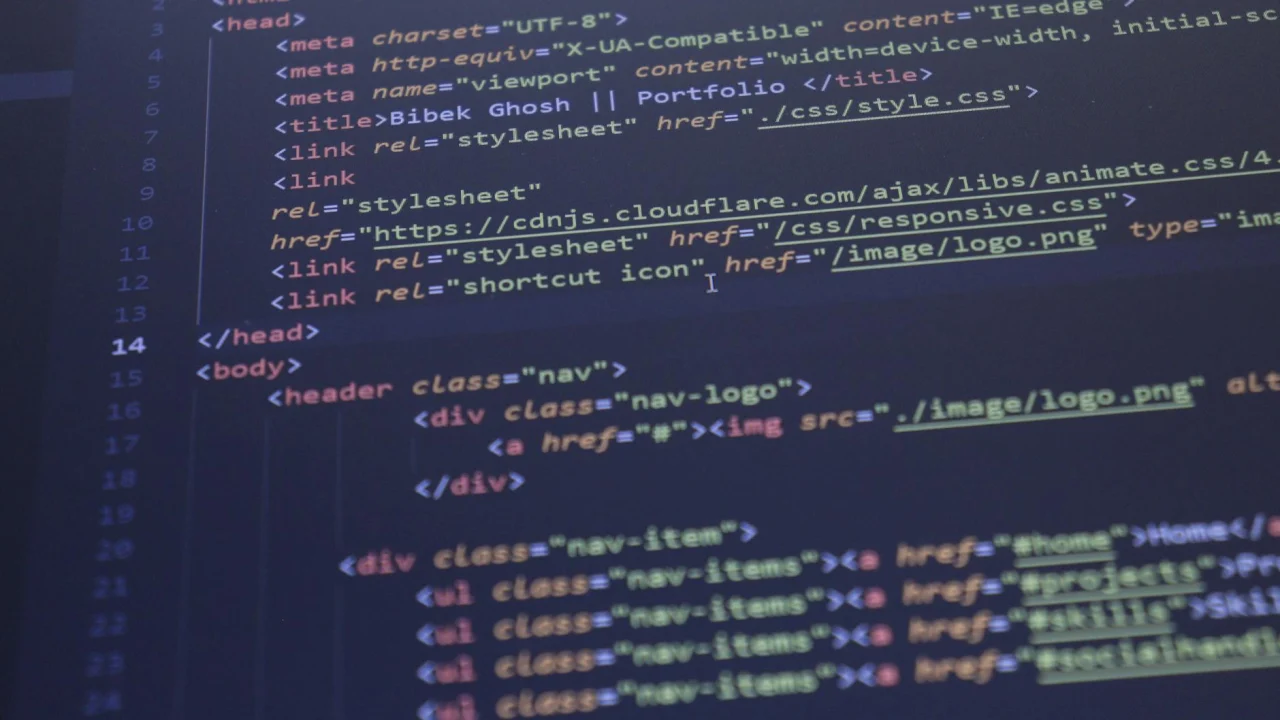
Every page you open in a browser relies on a set of rules that were defined long before the project even started. We call these rules web standards. They determine how HTML is written, how CSS behaves, what JavaScript is allowed to do and how browsers interpret it all. When standards are followed, a website works predictably across devices, loads faster and is easier to maintain. When they are ignored, problems appear quietly and are discovered only when they are expensive to fix. In this article, we explain what web standards actually are, who defines them and why they should be the starting point of every serious digital product.
What are web standards?
Web standards are formal specifications that describe the languages and technologies the web is built on. They are not the recommendations of some individual studio or the latest trend, but agreed-upon documents that state exactly how a technology should behave. Thanks to them, the same code produces the same result whether it is read by Chrome, Firefox, Safari or a lesser-known browser.
The most important groups of standards cover:
- Content structure: HTML, which describes what is a heading, a paragraph, navigation or a form.
- Appearance and layout: CSS, which defines colors, spacing, typography and behavior on different screen sizes.
- Behavior and interaction: JavaScript and the related APIs that make dynamic features possible.
- Accessibility: guidelines that ensure people with disabilities can use the website too.
Who defines the standards?
Standards are not the result of a single company’s decision. Behind them are international bodies that bring together browser makers, development teams and experts.
- W3C (World Wide Web Consortium) develops specifications for HTML, CSS and accessibility.
- WHATWG maintains the so-called living standard for HTML, which is continuously updated.
- ECMA International defines the JavaScript language through the ECMAScript specification.
- IETF standardizes network protocols such as HTTP that the web runs on.
This open process is why the web is not locked in the hands of a single owner. The specifications are public, anyone can read them, and browser makers implement them the same way. That shared foundation is exactly what makes the web a stable platform you can build on for years to come.
Why do standards matter in practice?
Following standards is not an academic exercise. It has concrete consequences for every aspect of a project, from development costs to user experience.
Predictability on every device
Users arrive from different phones, tablets, computers and browsers. Code written to standard behaves the same in all of these environments. Without standards, the development team spends a disproportionate amount of time on browser-specific patches, and every such patch opens the door to new bugs.
Easier maintenance and upgrades
Standardized, semantic code is readable for the next developer, not just for the person who wrote it. When structure is clearly separated from appearance and behavior, changes are faster and safer. A project built to standard is much more likely to survive a change of team or the addition of new features several years later.
If you are thinking about a new or better website for your company, see how we approach website development for clients in Sarajevo and across Bosnia and Herzegovina.
Speed and performance
Clean code without unnecessary workarounds is smaller, and the browser processes it faster. Browsers interpret standard HTML and CSS efficiently, while non-standard solutions often force slower fallback rendering. Today, speed is directly linked to keeping visitors on the site and to search engine rankings.
Standards and accessibility
One of the most important reasons standards exist is accessibility. The web should be usable by everyone, including people who use screen readers, navigate with a keyboard instead of a mouse or have impaired vision. The Web Content Accessibility Guidelines, known as WCAG, rely precisely on the correct use of standard HTML.
When you use the correct semantic elements, you give assistive technologies the information they need. A few practical examples:
- Headings in a logical order let a screen reader skip through the content.
- Forms with properly linked labels clearly tell users what is being asked of them.
- Sufficient color contrast makes text readable for people with low vision.
- Keyboard-accessible navigation allows use without a mouse.
Accessibility is not an add-on at the end of a project. It is a natural result of code written to standard, and a legal requirement in more and more places.
The link between standards and SEO results
Search engines read a page in much the same way assistive technologies do. The clearer the structure, the better they understand what it is about. Semantic HTML, correct headings and a clean structure make it easier to index content. Loading speed, which comes from tidy code, is also one of the signals Google takes into account.
That is why technical correctness and search visibility are closely connected. A website built to standard already meets many of the technical prerequisites for good rankings. If you are interested in how this foundation is built on further, take a look at our approach to SEO optimization, which starts from exactly that sound technical base.
How do you check whether a project follows standards?
There are several proven ways to determine how well a website complies with standards. The table below summarizes the most commonly used tools and what they measure.
| Area | What is checked | Typical tool |
|---|---|---|
| HTML and CSS | Correct syntax and structure | W3C validators |
| Accessibility | Compliance with WCAG guidelines | Automated accessibility checkers |
| Performance | Speed and rendering stability | Lighthouse |
| Compatibility | Feature support across browsers | Feature support tables |
It is worth noting that no tool replaces human judgment. Automated checks catch obvious errors, but an experienced team also spots the subtle problems a machine misses.
Standards as the foundation of a quality product
Web standards are not a limitation but a shared language that makes the web work at all. A project that follows them loads faster, is easier to maintain, is accessible to a wider range of users and performs better in search. A project that ignores them is built on shaky foundations that sooner or later give way.
At NEVIS, we treat standards as a starting point, not an afterthought. Every website development project starts from a clean, semantic structure and proven practices. If you are planning a new project or want an assessment of an existing one, feel free to get in touch and we will gladly take a look at where you stand.