The most expensive mistake in digital projects rarely happens in the code. It happens earlier, when people start building something nobody has fully thought through. The team spends months developing a feature, and only at the end does everyone realize the flow is wrong, that a screen does not match the real process or that a key step was left out. Wireframes and prototypes exist precisely to catch these mistakes while they are cheap, on paper or in a design tool, not in a production database. Below, we explain exactly what they are for, how they differ and why a serious development process never skips them.
What is a wireframe, and what is a prototype?
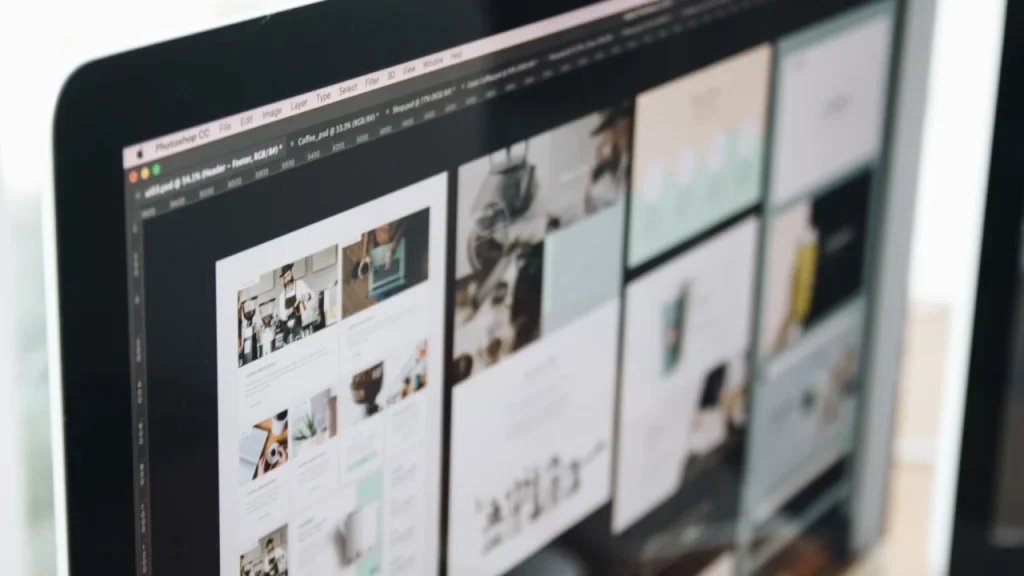
Although the terms are often confused, they are two different phases with different goals. A wireframe is a sketch of the structure. It shows where each element sits, how the content is laid out and in what order the user moves through the screens. It is deliberately gray, without images or polished design, because at this stage we want to keep the focus on layout and logic, not aesthetics.
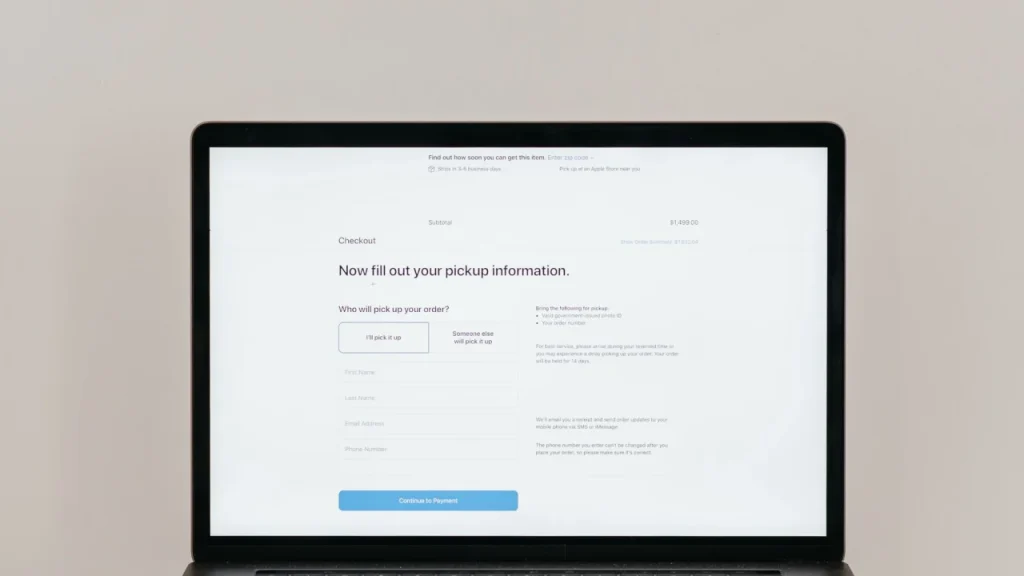
A prototype is the next step. It is an interactive model in which buttons can actually be clicked, screens change and the flow can be completed from start to finish as if the product were real. A prototype contains no real code or real database, but it gives a very realistic sense of how the application will behave. The difference is fundamental: a wireframe answers the question “how is this organized,” and a prototype answers “how is this used.”
Low and high levels of detail
Both artifacts exist at different levels of fidelity. Low fidelity is fast, rough and meant for early agreement. High fidelity is close to the final look, with real colors, typography and copy. The rule is simple: the less tested an idea is, the lower the level of detail should be. There is no point in polishing pixels on a screen that could be thrown out entirely tomorrow.
Why does it pay off before any code is written?
A change in a wireframe takes a few minutes. The same change, once it is implemented, wired through the database, tested and deployed to the server, costs incomparably more. That is why wireframes and prototypes are the cheapest insurance a project can have. The concrete benefits are:
- Catching flow errors early. Logical gaps in the process become visible as soon as you try to click through the prototype, not when a user gets stuck in the middle of an order.
- Aligning expectations. The client, the designer and the developer look at the same screen and talk about the same thing. Everyone reads a written feature description differently, but everyone sees an image the same way.
- A realistic estimate of scope. Once the flow is worked out down to the screens, time and cost estimates become precise instead of approximate.
- Fewer changes during development. Every decision made in design is one less decision that interrupts a developer mid-task.
What does the process look like in practice?
A good process does not start with a tool, but with questions. Before we draw a single line, we want to understand who the user is, what they are trying to achieve and what the shortest path to that goal is. Only then does structuring the screens make sense. A typical sequence looks like this:
- Defining user flows. The key scenarios are listed, for example registration, creating an order or payment.
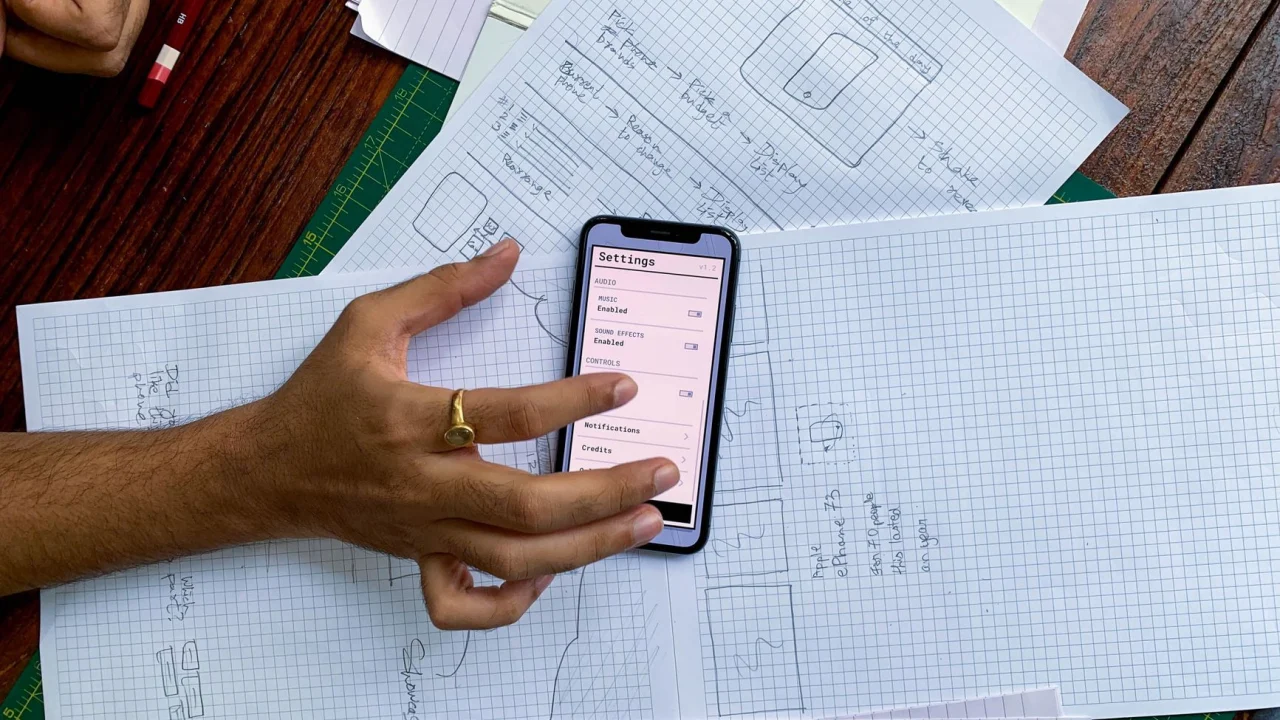
- Sketching the structure. Each screen gets a rough layout, first by hand or in a simple tool.
- Wireframe. The sketches are turned into clean, consistent screens with a clear content hierarchy.
- Prototype. The screens are linked into a clickable flow that can be completed from start to finish.
- Testing with users. The prototype is given to real people to use, and the obstacles they run into are recorded.
- Handoff to development. Only an agreed-upon, tested prototype goes to the developers as a clear specification.
This sequence is not bureaucracy. It ensures that each next step builds on something already confirmed, instead of on an assumption.
If you are thinking about a new or better website for your company, see how we approach website development for clients in Sarajevo and across Bosnia and Herzegovina.
Testing the prototype with real people
A prototype delivers the most value when you give it to someone who did not build it. Five people trying to complete one task will uncover a surprising number of problems. In one place they will pause because they do not know where to click, in another they will head down the wrong path because a button label misled them. These are all findings that are easy to fix in a prototype and painful to fix in a finished product.
When testing, it is worth tracking a few things: whether the user completes the task without help, how long it takes, where they hesitate and what they say out loud. The goal is not to prove the design is good, but to find where it is not. The more weaknesses you uncover before development, the fewer costly surprises later.
When is a wireframe enough, and when do you also need a prototype?
Not every project needs the same level of preparation. A simple brochure website can move into website development with a wireframe and a basic design, without a complex interactive prototype. On the other hand, complex web platforms and applications with many steps almost always require a prototype, because the flow is too complicated to imagine reliably from static screens.
| Project type | Wireframe | Interactive prototype |
|---|---|---|
| Brochure website | Recommended | Usually unnecessary |
| Online store | Required | Recommended for checkout and cart |
| Business platform | Required | Required |
| Mobile app | Required | Required |
What does a good prototype hand over to development?
When a prototype reaches the developers, it should be more than a picture. It comes with a description of behavior: what happens on click, how the system responds to an error, what empty states look like when there is no data yet and how the screen adapts to smaller devices. These details separate a prototype that speeds up development from one that leaves the developer guessing. The less guessing, the faster and more predictable development is, and the closer the final product is to what was envisioned.
In the NEVIS approach, wireframes and prototypes are not a separate cost but part of healthy development that saves everyone time. If you are planning a digital product and want to put it on a foundation you will not have to tear down, take a look at our services or get in touch so we can work out the first flow together before we write the first line of code.